About
Lindokuhle Nkosi is a South African writer and interdisciplinary practitioner whose textual interventions often extend beyond the page, merging with installation and performance to explore the spatial, material and performative dimensions of language. The Founding Editor of Arts24, the first dedicated arts pages on South Africa’s largest mainstream news platform, she has contributed to a wide range of local and international publications, including the Mail & Guardian, the Sunday Times, Getaway, the Red Bulletin and Mahala. She has also written for galleries including Southern Guild and Rele.
Her expansive body of work and curatorial practice, which moves between journalistic, reflective and experimental modes of writing, is marked by a sensitivity to texture, both linguistic and material, and an engagement with lived realities. She co-edited African Futures for the Goethe-Institut South Africa, wrote and curated for Invisible Borders, and has curated and co-curated exhibitions and public art projects.
Music runs through the work. She was a partner at the independent label Mushroom Hour Half Hour and has written liner notes for records including Shabaka and the Ancestors, SPAZA and Thath’i Cover Okestra, Vol. 5. A long essay on a life in music, What is wrong with grooving?, is in development, and her podcast Not a Bad Girl, on deviancy and womanhood, is coming soon.
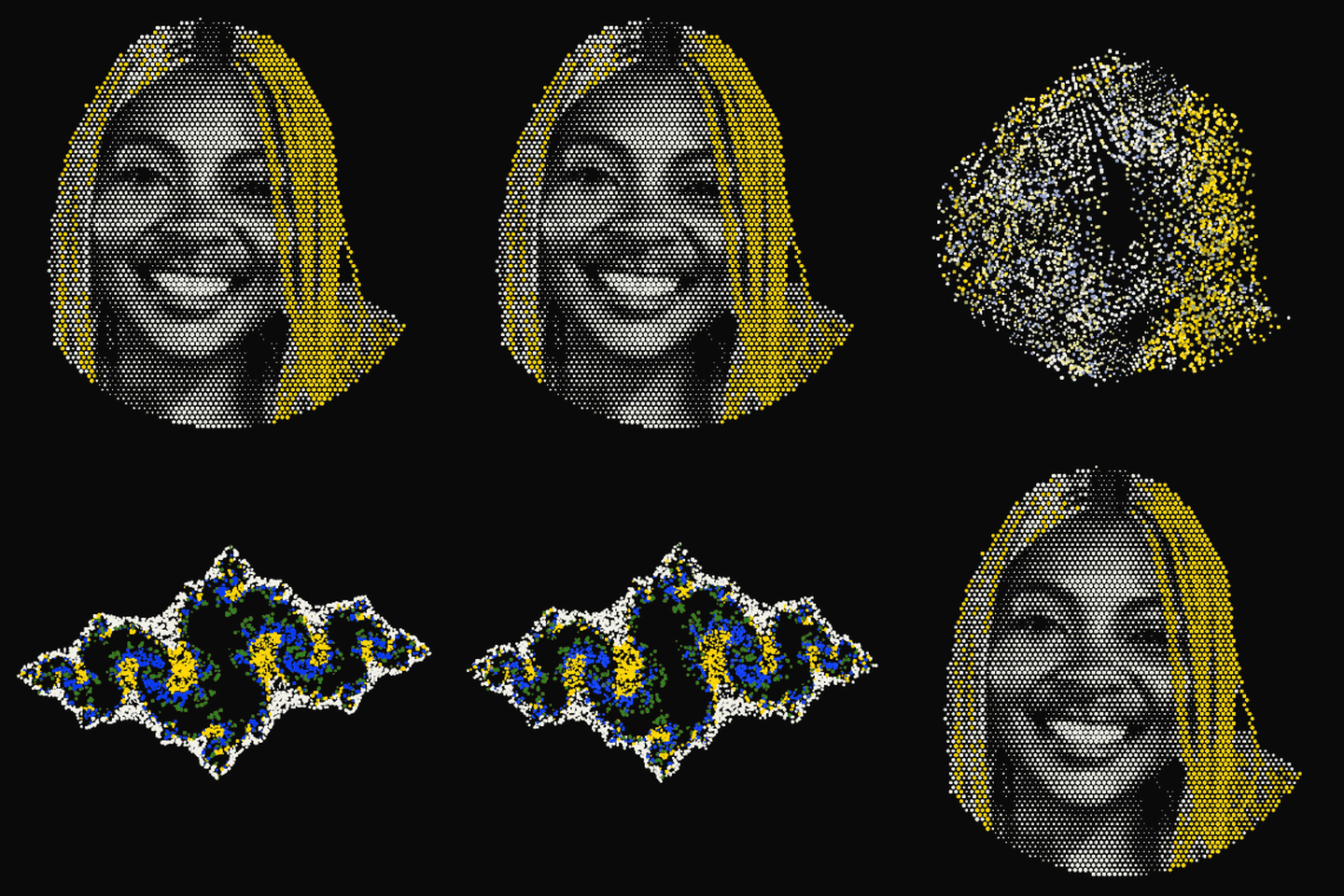
That attention to form extends to a current interest in data and storytelling. Her starting point is data as the story in its elemental form: not data as sourcing, buried beneath the prose, but data as the shape a story takes, the structure through which a reader moves and the terms on which they are asked to believe it. The concern is as much editorial as it is aesthetic, in a media landscape where trust has been lost in both what is reported and the forms reporting takes.
It is also an old idea. Africa has always told its stories in code. Beadwork carried messages between lovers. Luba memory boards held the history of a kingdom in beads and pegs, to be read by touch. In 1900 W. E. B. Du Bois hand-drew data portraits of Black life in America so that people could see what the numbers meant. Artists such as Nolan Oswald Dennis draw the links between systems and the people living inside them, and today the same instinct travels by SMS and WhatsApp. She works in that line, where language, pattern and data are one thing.
This is the thinking behind Nsatimone Narrative Studio, which she founded, and Umlando, its publication and commission arm for digital stories. Umlando’s first story, Nine Passports, No Pass, follows Miriam Makeba across the map.
Her scholarly pursuits reflect a deep engagement with modes of survival, dreaming and the Black radical imaginary. Holding an MA in Creative Writing, her research interrogates the creative and liberatory vernaculars emerging from hyper-violent societies, situating language as both an archive of trauma and a site of potential rupture. That research is where her book, There’s Another Story Here, began.
She is currently enrolled in the inaugural MTN Pan-African Media Innovation Programme, a 2026 pan-African fellowship in journalism and new media. Through it she is developing Umlando, working across modules on media innovation and entrepreneurship, digital journalism and audience data, and information integrity and ethics.

